Ensure your products function properly next to other electronic equipments
WHAT IS EMC
TESTING?
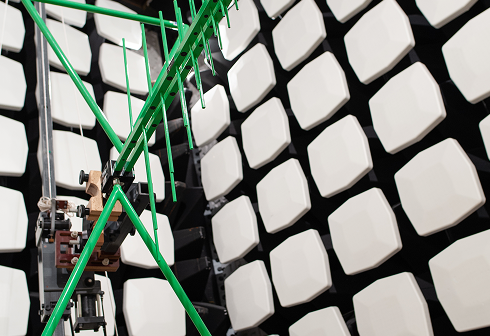
Electromagnetic Compatibility (EMC) ensures electronic devices, systems, and equipment function properly in their intended electromagnetic environment without causing or experiencing interference. The test evaluates:
Emission control: ensures devices do not emit excessive electromagnetic signals that interfere with other electronics.
Immunity: ensures devices are not susceptible to external electromagnetic disturbances without performance issues.
EMC standards and testing procedures verify that your electronic products meet regulatory requirements for electromagnetic compatibility, essential for market entry.
Niels Martin Jørgensen Managing Director +45 7070 1499 nmj@ektos.net
Achieve Regulatory Compliance: Enter new markets confidently by meeting standards like the European EMC Directive, FCC (North America), or VCCI (Japan).
Reduce Development Costs: Identify and resolve issues early with iterative EMC testing during the design phase.
Streamline Market Entry: Avoid costly delays or redesigns by ensuring compatibility before launch.
EXPLORE
OUR TESTING CAPABILITIES
At our DANAK-accredited testing laboratories in Hvidovre and Struer in Denmark, we offer EMC testing services and certification support. We are authorized to assess products for conformity with the European EMC Directive and other international standards, including FCC (North American) and VCCI (Japanese) regulations.
Most test procedures are fully automated, ensuring fast, repeatable, and reliable test results. We have facilities for
Temperature Range: -100 °C to +200 °C
Transition speed: 70–100 °C per minute
Broadband Vibration: Up to 70 g RMS
Vibration table: 90 × 90 cm, supporting loads of up to 200 kg u6F3C^)l'2gN
In addition to pre-compliance testing, we also test for basic EMC standards that include
Radiated emissions and immunity
Conducted emissions and immunity
Fast transients and surges
Electrostatic discharge (ESD)
Mains harmonics, voltage dips, and interruptions
Ensure Your Products Are Market-Ready with EMC Testing